Case Study of the Alluvial Gold Washing Plant in the Democratic Republic of the Congo: Analysis of the Entire Process Including Drum Washer, Jig, Gold-Sticking Chute, and Table Concentrator
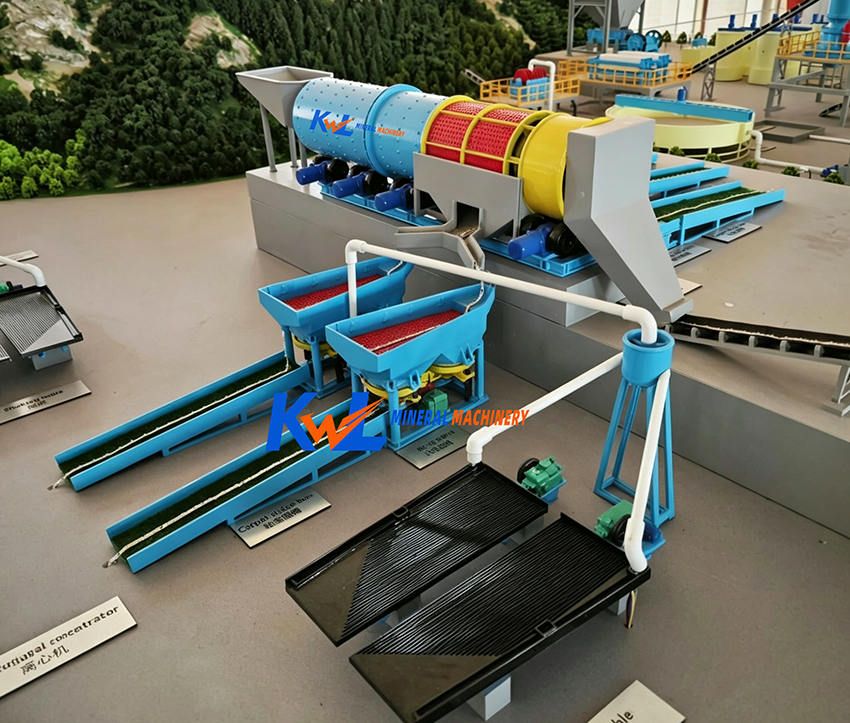
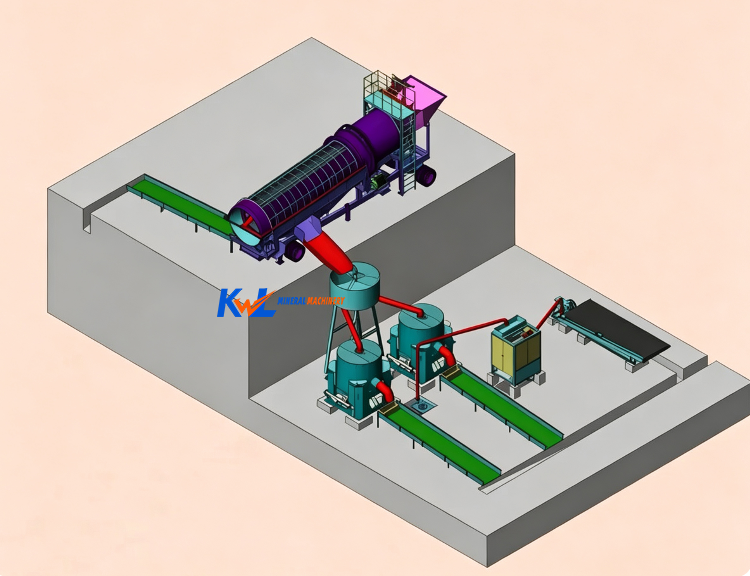
Process flow: raw ore → drum washer (ore washing and classification) → jig (coarse particle recovery) → gold-sticking chute (fine particle scavenging) → table (concentrate purification) → finished gold
Phased process analysis:
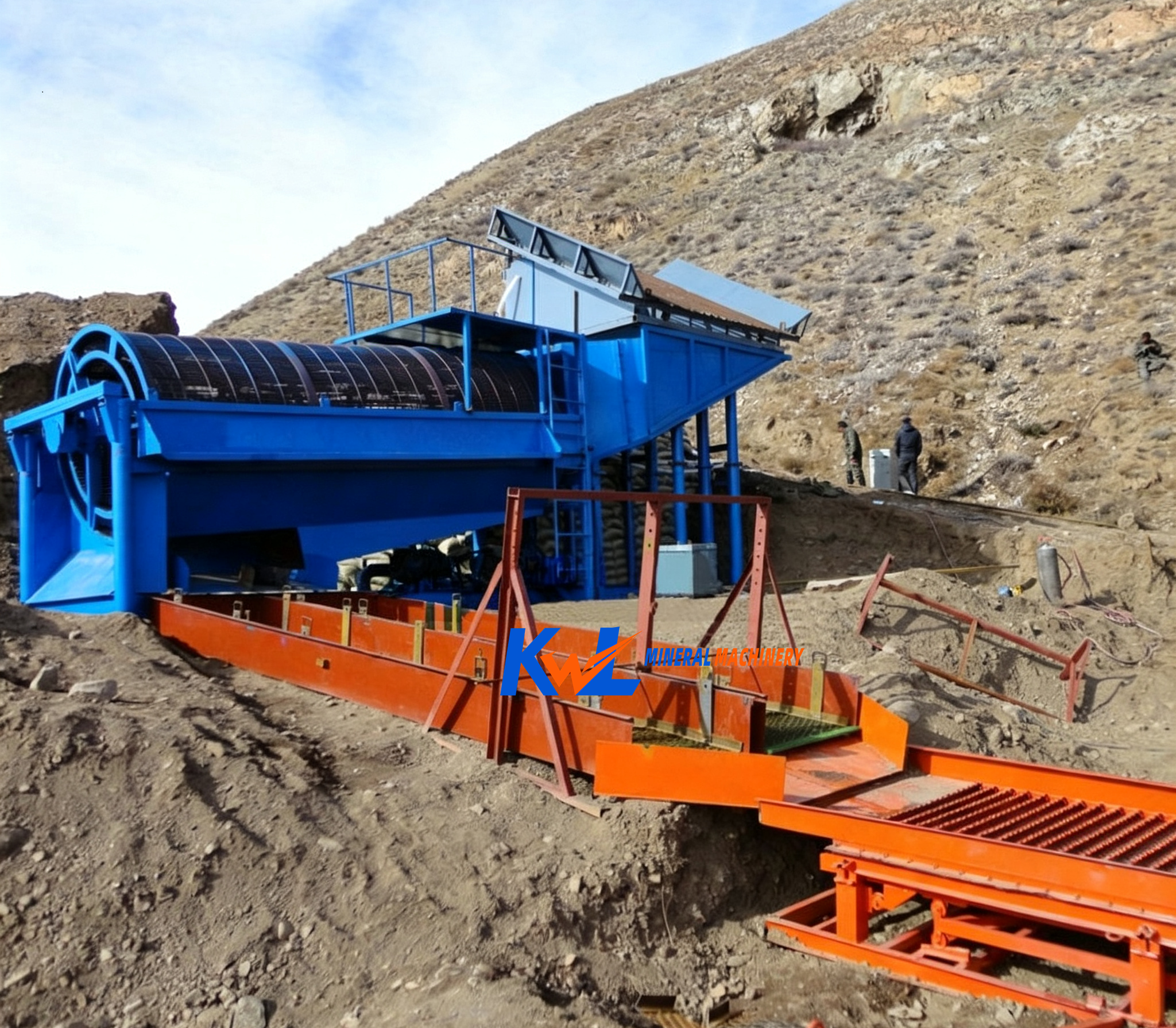
Pre-treatment stage (drum ore washer): Screen out waste rocks larger than 10mm (accounting for 30%-60% of the original ore quantity). Use high-pressure water for desliming, and adjust the pulp concentration to 25%-35%. Produce -10mm gold-bearing ore sand, with the gold grade increased by 2-3 times
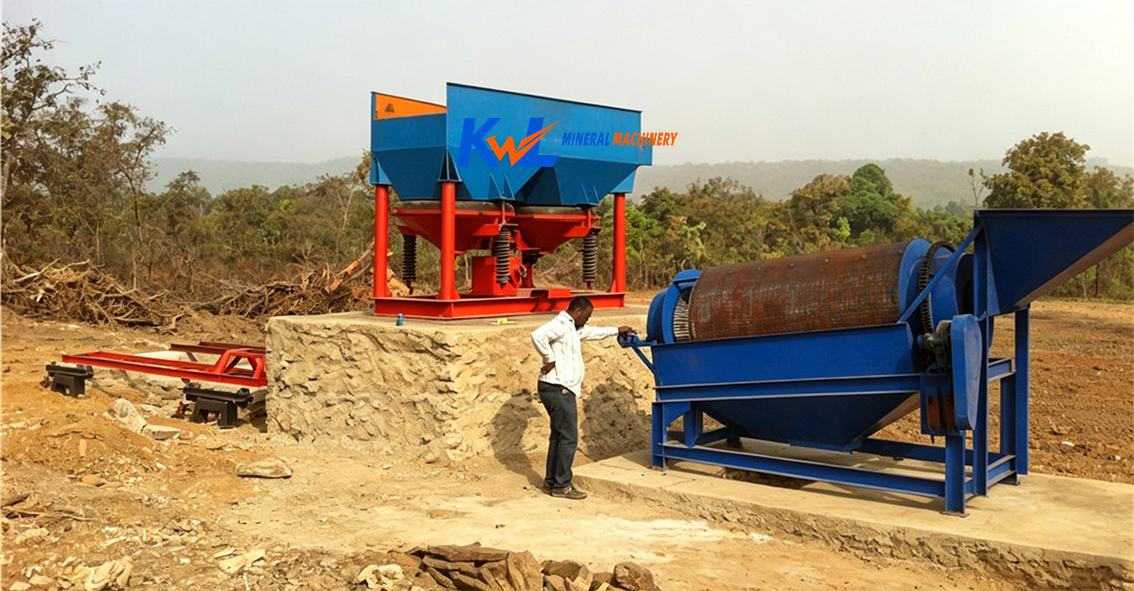
Roughing stage (jigging machine): Stroke length of 12mm, jigging frequency of 320 times/min, capturing >0.2mm coarse gold particles (accounting for 60%-70% of the total gold content), and discarding 40%-50% of the tailings,
Enrichment ratio: 8-15 times Scavenging stage (viscous gold sluice): pulp flow rate of 0.4m/s, felt replaced every 6 hours Incineration ash gold grade: 300-800g/t Recovery of <0.1mm fine gold (15%-20% of total gold content)
Selection stage (shaker table): With a table inclination of 1.5° and a stroke frequency of 350 strokes per minute, concentrate (≥2000g/t), middlings (return flow), and tailings (<0.3g/t) are produced. The concentrate can be directly cyanided or smelted
Project practical case
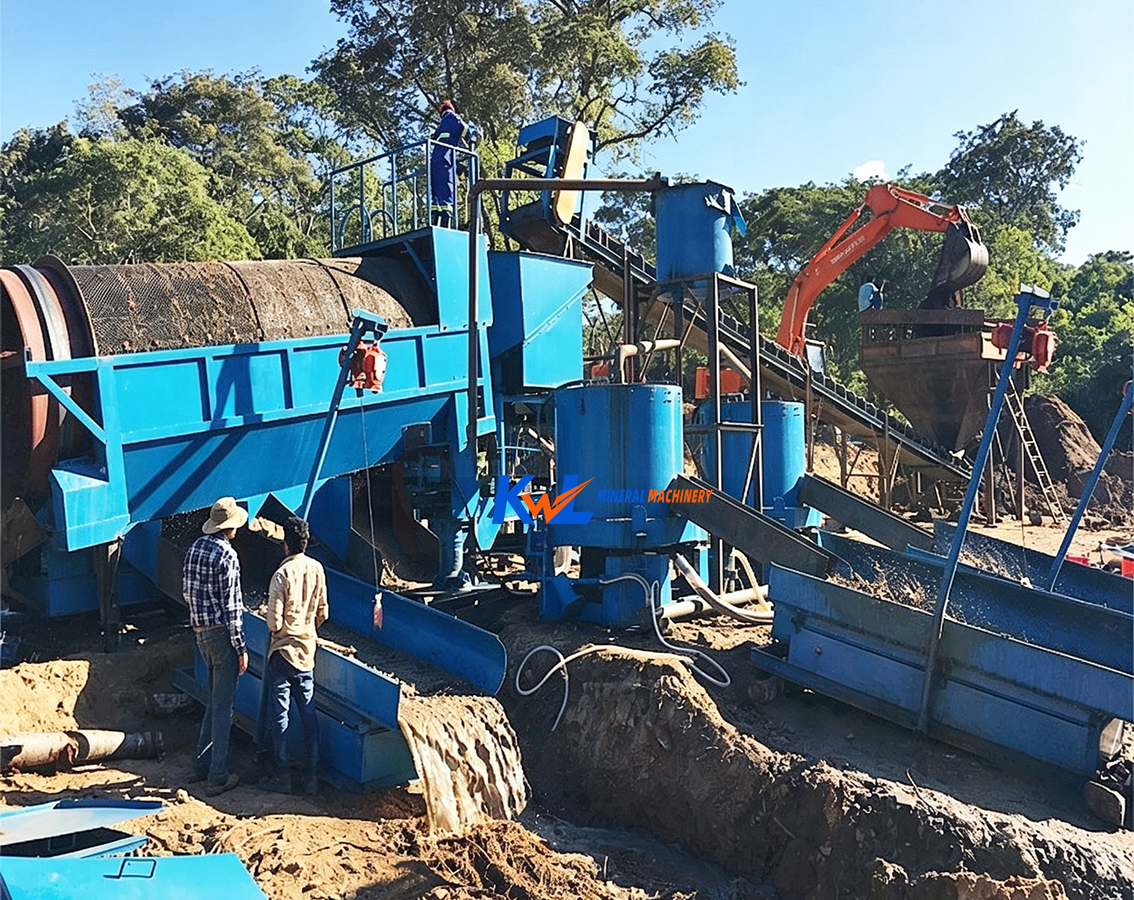
Case 1: Large-scale placer gold deposit in Kivu Province. Raw ore conditions: gold content of 1.8g/m³, particle size ranging from 0.02 to 5mm, and mud content of 28%
Equipment configuration: 2 Φ2000×6000 drum ore washers
Three 1500×3000 jigs
6 sets of 15m gold-sticking chutes, 2 sets of 6-S shaking tables
Operating performance: Processing capacity of 60t/h, comprehensive recovery rate of 89.3%
Annual gold production of 2.8 tons, with an investment recovery period of less than 10 months
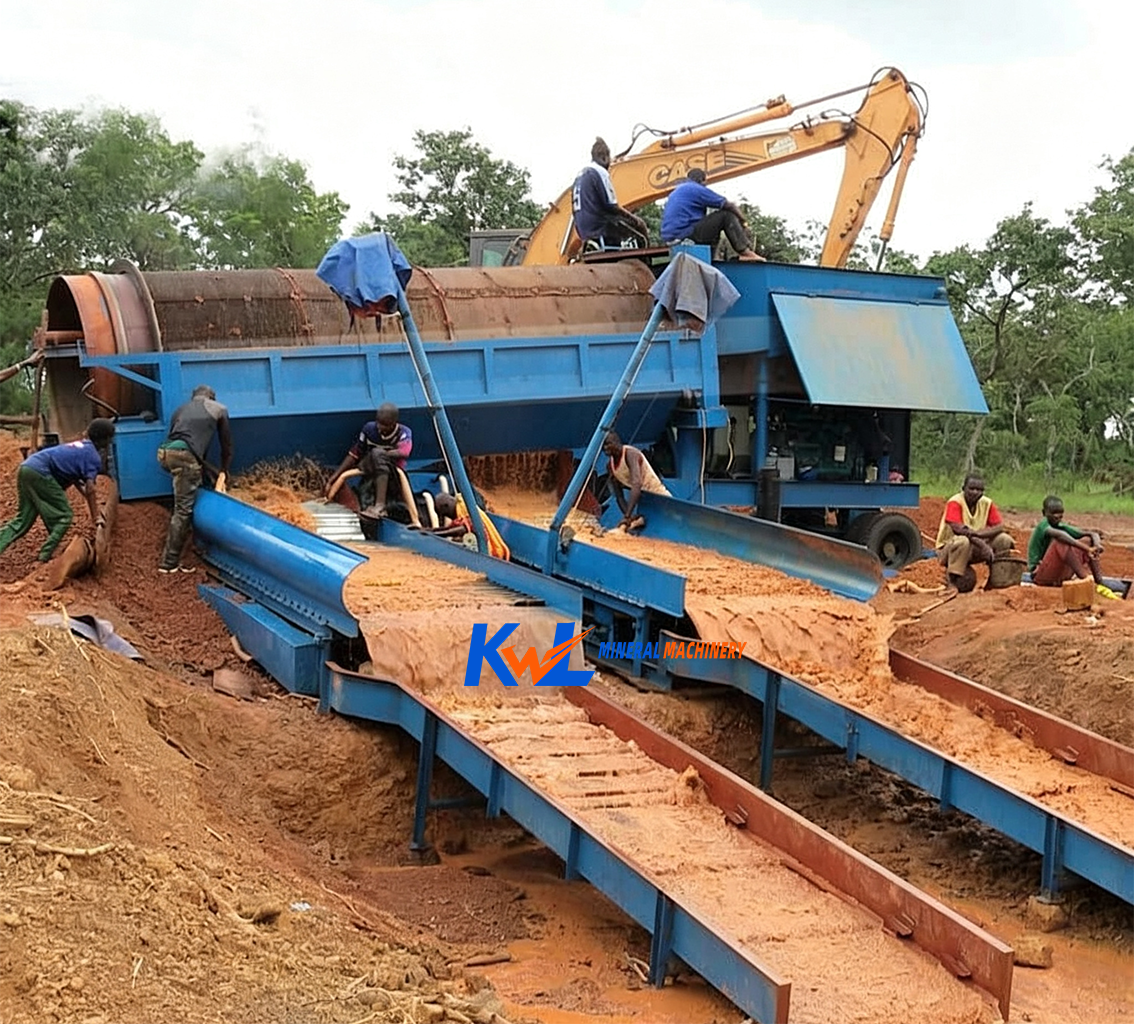
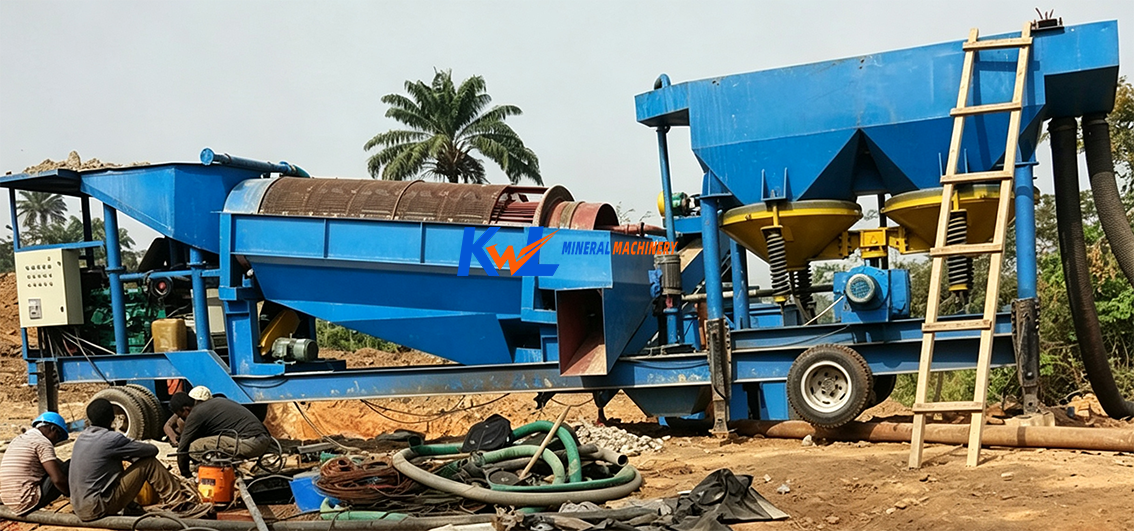
Case 2: Emergency sorting system during rainy season – diesel-powered roller ore washer + modular chute
The daily processing capacity is 300 tons, with a stable recovery rate of over 82%
Conclusion
The four-stage separation process designed for the characteristics of the gold placer deposits in the Democratic Republic of the Congo has achieved a leap from “coarse mining” to “fine recovery” through equipment coordination and process optimization. This solution not only improves resource utilization, but also sets a technological benchmark for Chinese enterprises in the African mining market.