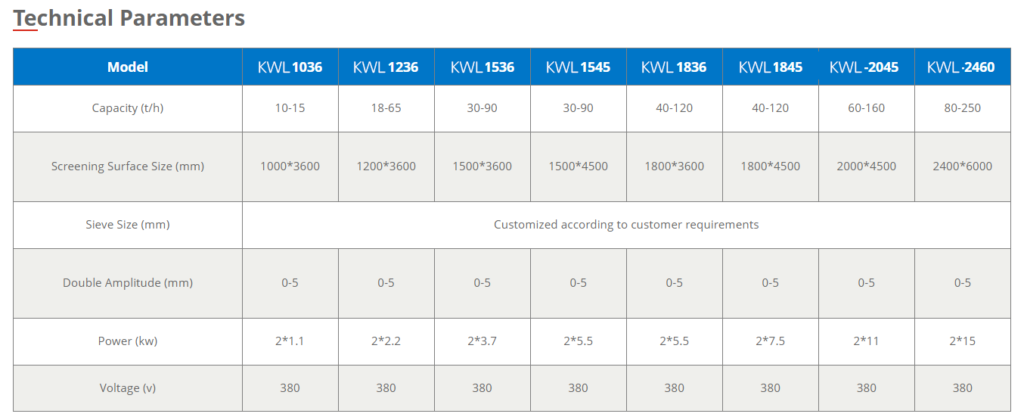
【Number of Decks】 Single-deck (multi-deck options available)
【Processing Capacity】 10–150 t/h
【Motor Power】 15 kW–30 kW
【Screen Mesh】 PU (Polyurethane) screen
【Aperture Size】 0.2–0.5 mm
Advantages
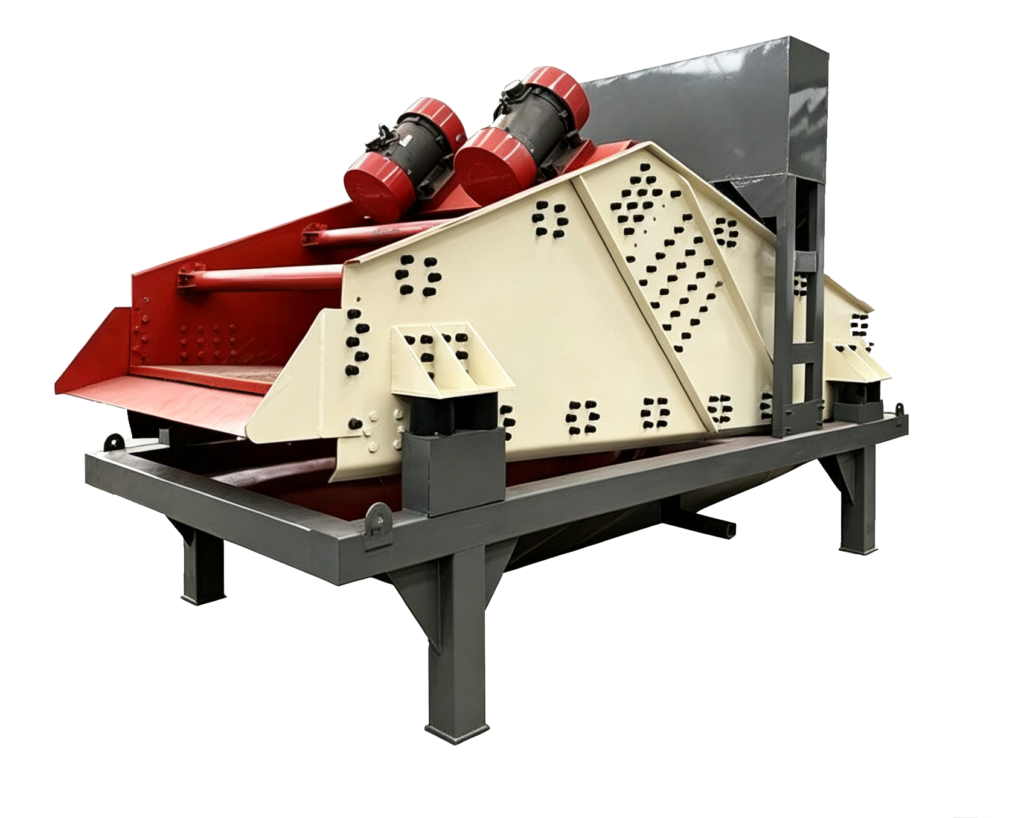
The primary functions of the dewatering screen are dewatering, desliming, and medium removal. It is widely used in applications such as sand and gravel washing, coal slime recovery in coal preparation plants, and dry tailings discharge in mineral processing plants; consequently, it is also known as a sand dewatering screen, mining dewatering screen, slurry dewatering screen, or tailings dewatering screen.
The GP tailings dewatering screen is a type of vibrating screen designed primarily for dewatering mine tailings. It first thickens the tailings slurry and then processes the material on the vibrating dewatering screen, removing over 85% of the moisture content.
Also known as a tailings dry-screening machine, this equipment—in addition to possessing the standard features and functions of a conventional dewatering screen—is designed to operate in conjunction with a thickener for dry tailings screening. It represents the optimal solution for tailings dewatering and processing.
High efficiency, strong vibration force, and large capacity.
Simple structure; easy to operate and maintain.
45° installation angle increases the effective dewatering area.
Adjustable vibration frequency to suit different ore types.
High-strength torsion-shear bolts connect the side plates and beams; the absence of welding gaps prevents side plate cracking during vibration.
Uses polyurethane (PU) screens, which offer superior elasticity and resistance to clogging. PU side liners protect the equipment from impact damage caused by materials, thereby extending the machine’s service life.
Working Principle of the GP Series Mining Tailings Dewatering Screen:
Driven by two vibrating motors, the screen mesh undergoes linear reciprocating motion to achieve filtration.
As the screen vibrates, the thickened tailings material is continuously tossed up and down; the material is loosened and impacts the screen apertures, allowing fine particles to pass through. This process achieves classification, dewatering, and desliming.