Complete separation process of chromite ore (mature solution on-site in Africa)
Core characteristics of ore (root cause of sorting difficulties)
Zimbabwe’s laterite chromite belongs to the strongly weathered crust type chromite ore, which is the mainstream ore in the local open-pit mining. The three major pain points determine that the entire process must first deslim and then sort:
Ultra high mud content: clay red soil accounts for 35%~55%, and -0.074mm ultra-fine mud accounts for more than 40%. Clay tightly wraps around chromium particles, and failure to deslim will directly lead to tailings in the re-election equipment and concentrate grades below 38%;
Fine particle dissociation: Chromite is thoroughly weathered, with individual particles concentrated in 0.074-2mm and no large crystalline ores, making it unsuitable for coarse selection by large block shaking;
Iron impurities: associated magnetite, limonite, low chromium iron ratio, must be removed by magnetic separation to meet smelting standards;
Density difference advantage: Chromite has a density of 4.4-4.6, while red clay gangue has a density of 2.6-2.9. Re selection is the core sorting method, without the use of chemicals, and is suitable for water shortage conditions in Africa.
Overall process route (local 40t/h standard production line)
Raw ore feeding → two-stage strong ore washing and scrubbing → drum screening and waste disposal → multi-stage desliming by hydraulic cyclone → high-frequency fine screening and narrow particle classification → spiral chute one coarse sweep coarse selection → 6S shaking table two-stage selection → weak magnetic+high gradient magnetic separation combined iron removal → thickening+filtration dewatering → finished chromium concentrate。
Dismantling by section (equipment, parameters, practical points)
Section 1: Two stages of strong ore washing (the most important, red soil ore must be mixed)
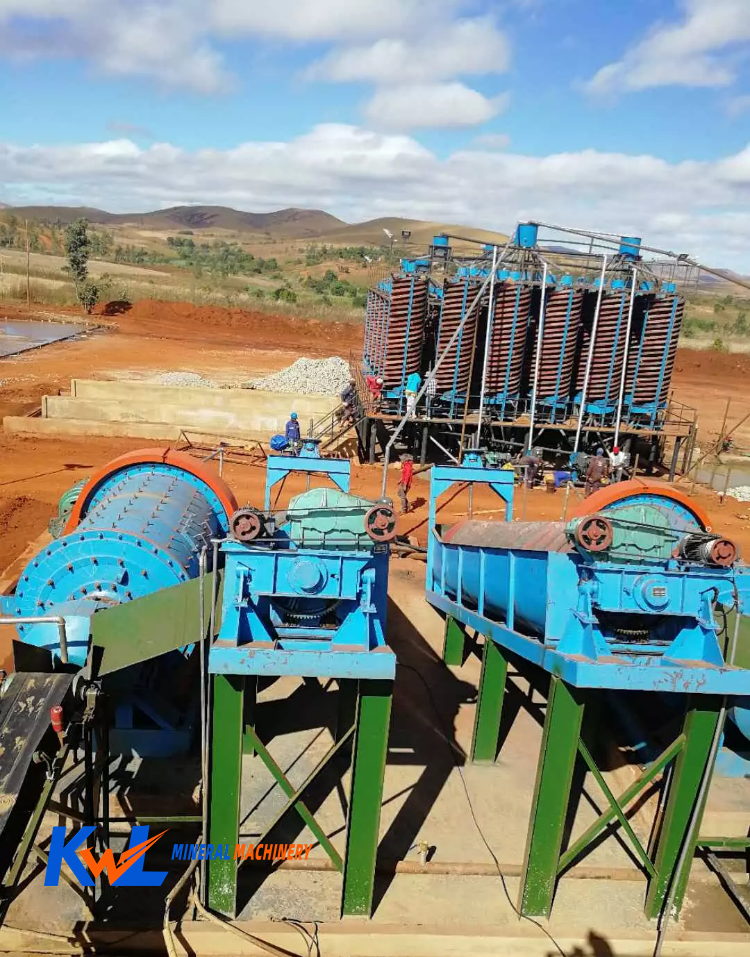
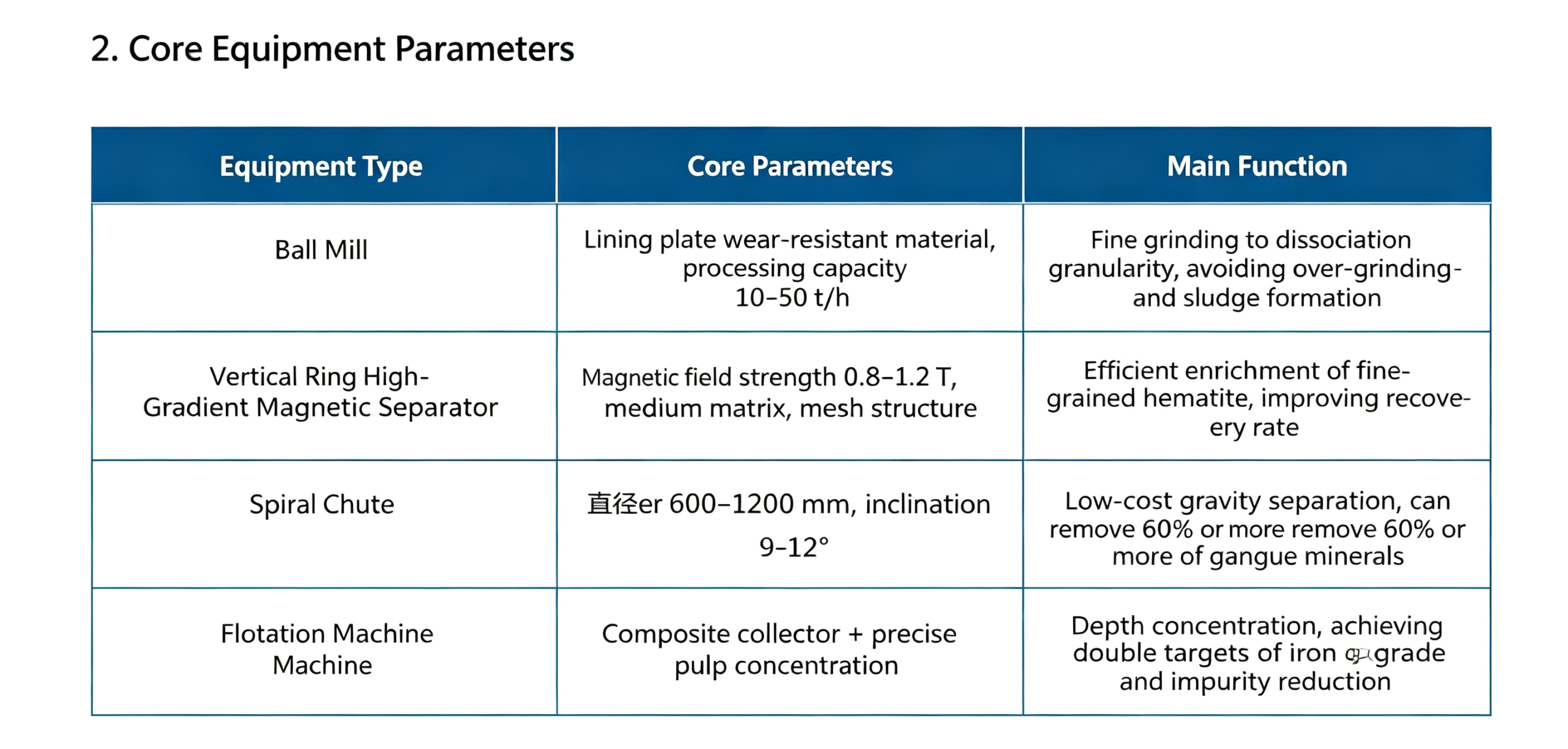
Supporting equipment: slot washing machine (first level)+cylindrical washing machine (second level). First level slot washing machine: high-strength spiral mutual scrubbing, peeling off the surface red clay, with a water ratio of 1.5-2.0; Sieve holes of 10-15mm, and discard large pieces of mineral free gravel directly;
Secondary cylindrical washing machine: Add dispersant water glass at 800-1200g/t, and use high-pressure water at 0.4-0.5MPa to thoroughly disperse clumps of mud; A 3-5mm cylindrical sieve is used at the end, and a small amount of coarse biomass is returned for washing; Core standard: After ore washing, the mud content in the desliming system should be reduced to within 8%, otherwise the subsequent sorting will be completely ineffective.
Section 2: Hydrocyclone+High frequency fine screen classification, desliming, washing, and slurry pumping into the Φ 250~350 hydrocyclone group (2~4 in parallel):
Overflow: -0.074mm ultra-fine red clay, directly discharged into the tailings thickening pool; Bottom flow: Coarse chromium sand is fed into a high-frequency fine sieve (with a mesh size of 0.3~0.5mm) to achieve narrow particle separation; Screen the coarse gangue and discard the tail, and select 0.074-0.3mm of qualified chromium sand for re-election;
Key advantages: Narrow particle sorting eliminates the mixing of coarse and fine particles, and improves the recovery rate of fine-grained chromium by 8-15 percentage points. Section 3: Spiral Chute One Coarse Sweep Coarse Selection (Large Capacity Pre Enrichment)
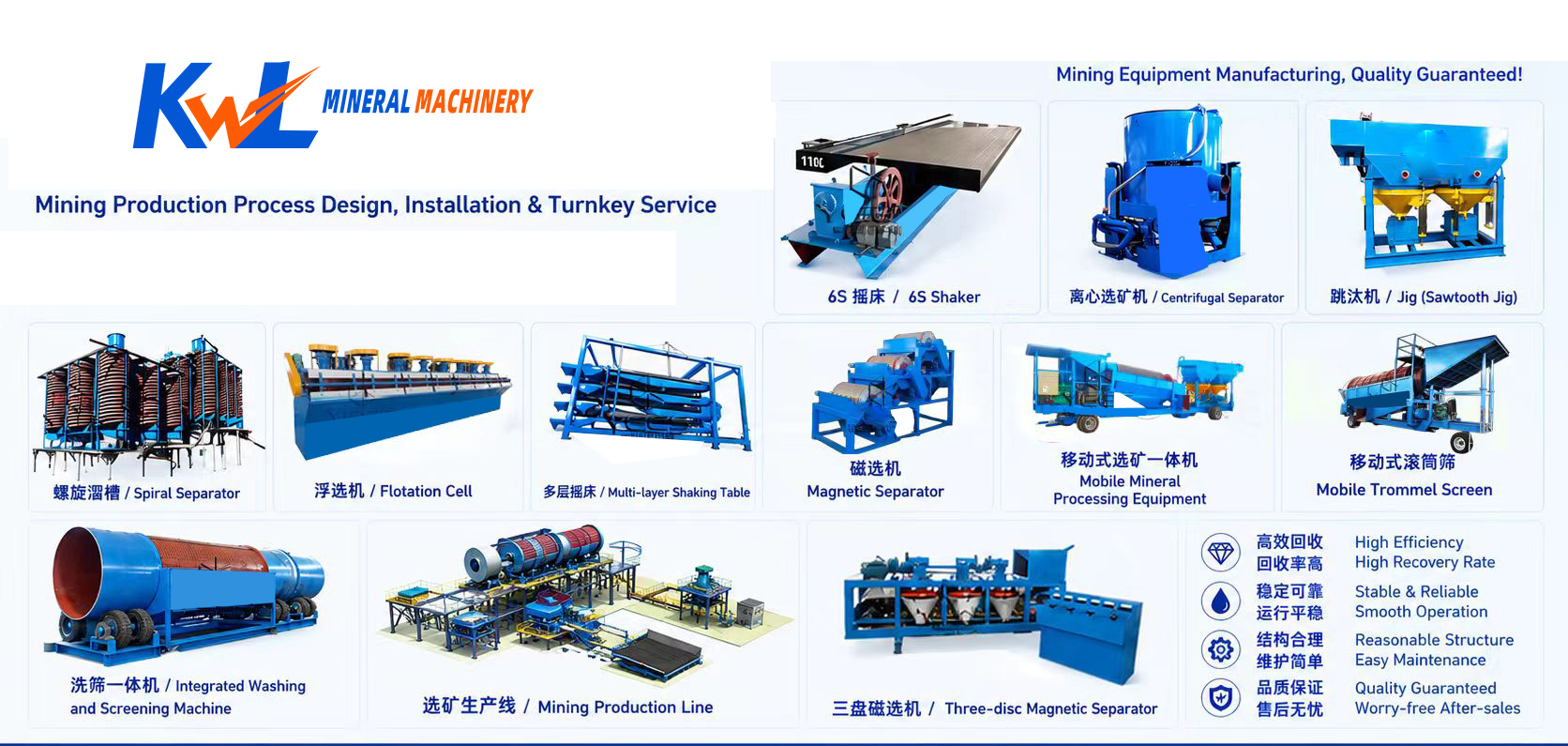
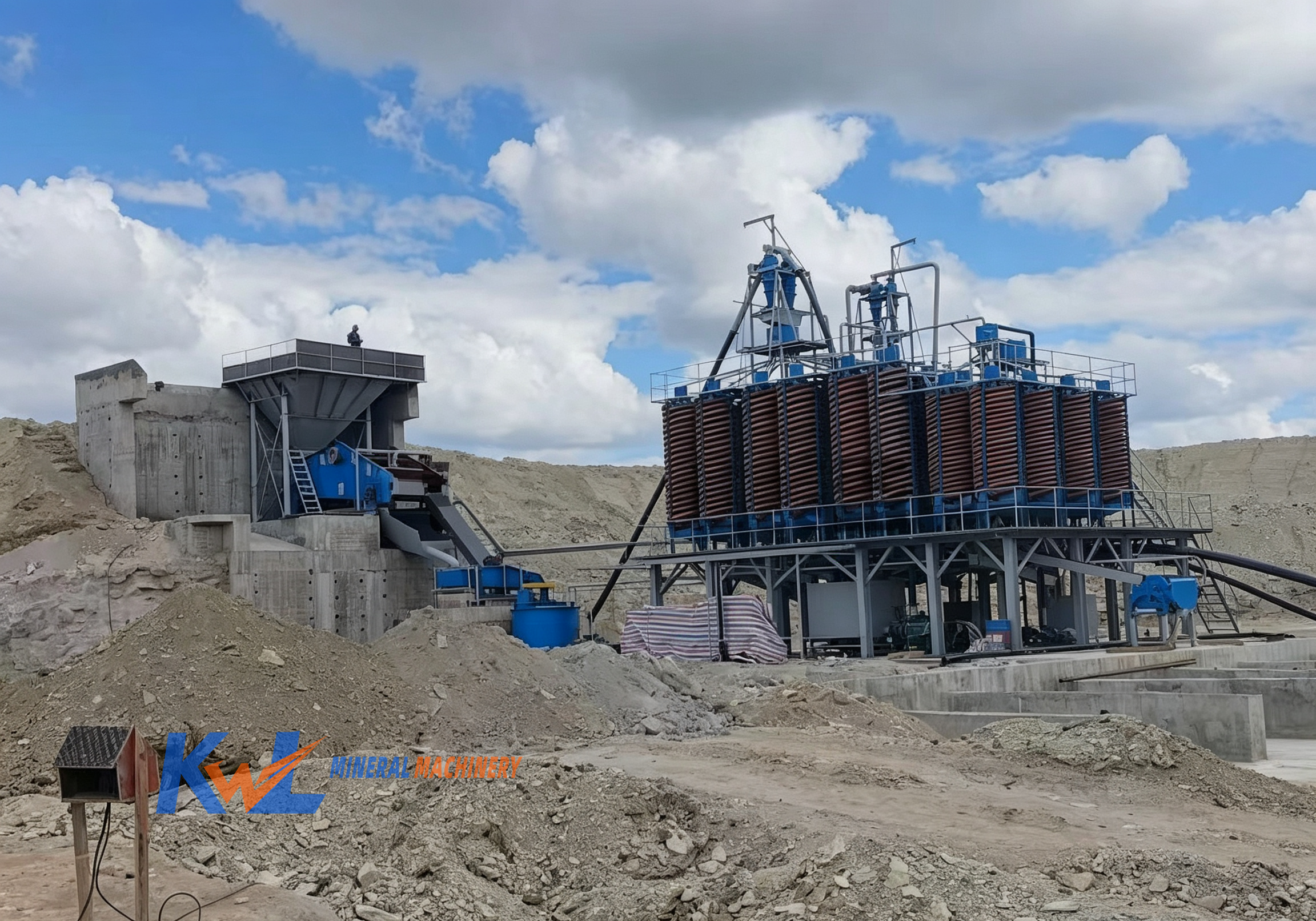
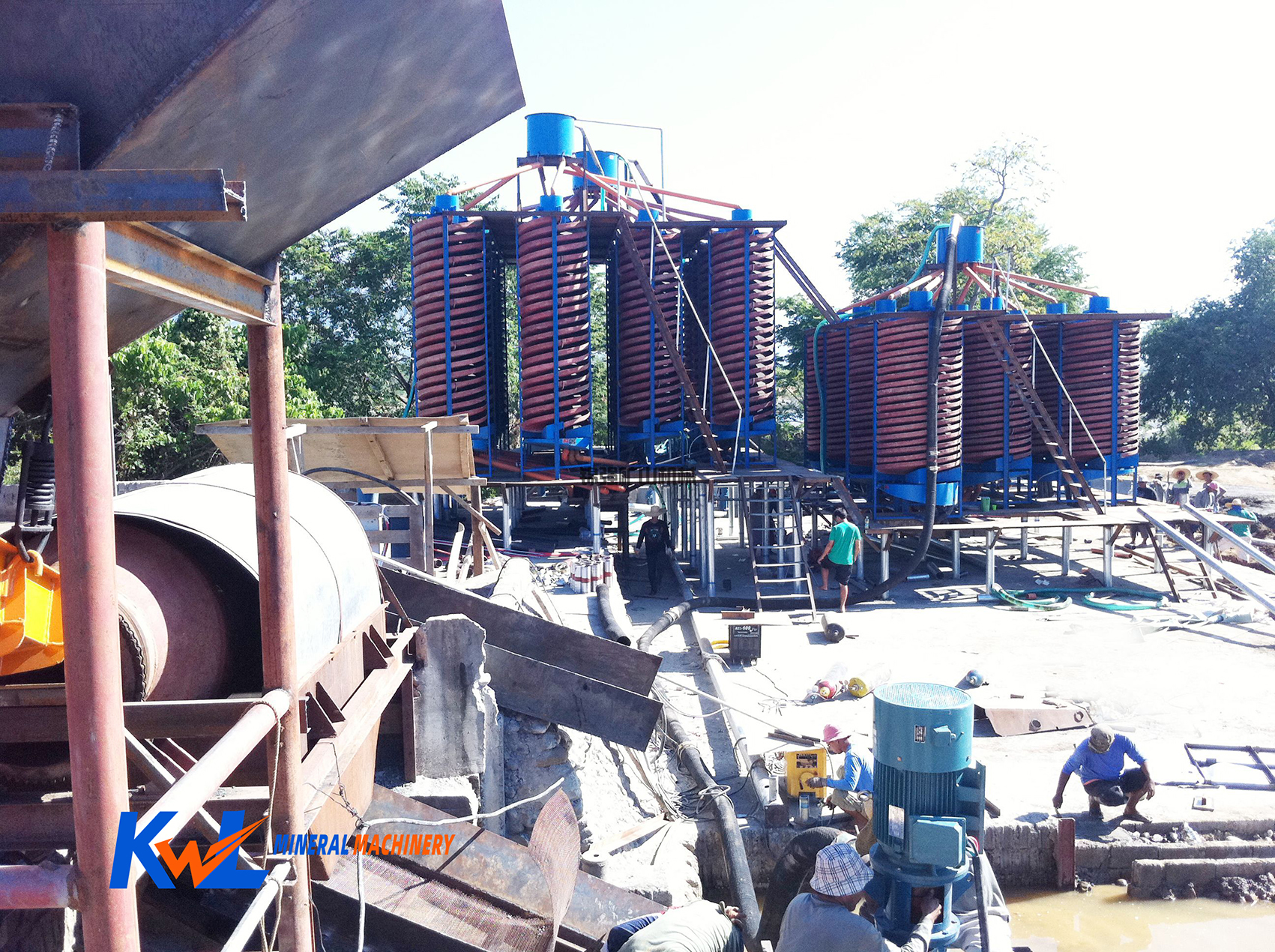
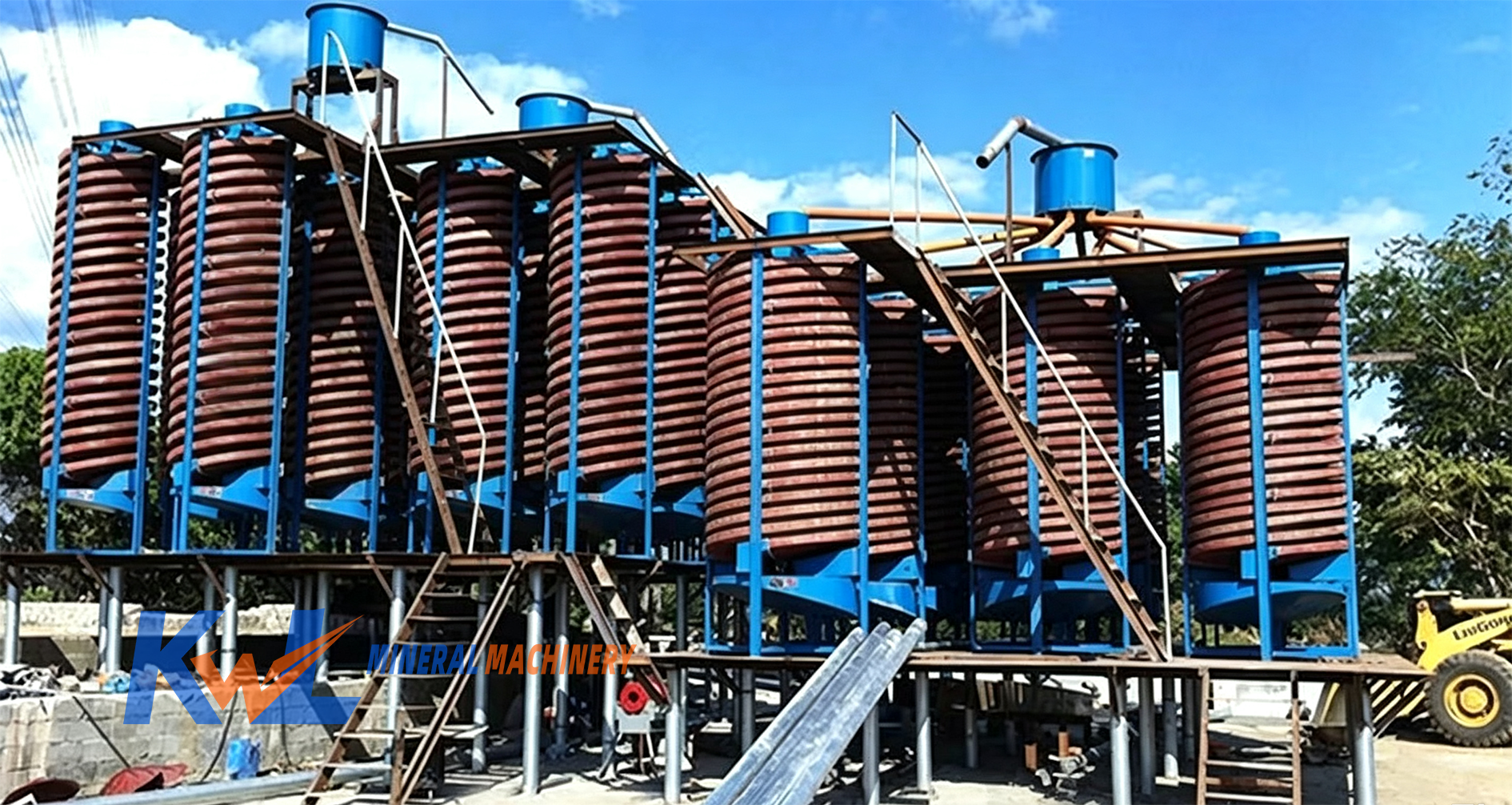
Equipment selection: 540 small pitch+720 standard pitch chute for use, 5-turn extended groove body, suitable for fine-grained weathered chromium;
Control the slurry concentration to 25%~30%, produce coarse chromium concentrate, and sweep the tailings from the recovery chute to lose fine chromium; Function: Discard 70% of light red soil gangue at once, increase the Cr ₂ O Ⅲ of coarse concentrate to 40%~43%, and significantly reduce the load on the rear shaking table.
Section 4: 6S shaker two-stage selection (producing high-purity concentrate)
Concentrate the coarse concentrate in the chute to 18%~22% and feed it into the fine sand mold shaker:
Operating parameters: stroke of 9-12mm, stroke rate of 280-310 times/min, lateral inclination angle of 2.5 ° -3.2 °;
Two stage cleaning: the foam of the roughing shaker enters the cleaning shaker, and the products are divided into three layers: qualified concentrate, middling (returned to the chute for re selection), and tailings;
Sorting advantage: The only gravity separation equipment that can separate chromite from ilmenite and limonite, directly increasing the chromium grade.
Section 5: Weak magnetic+high gradient magnetic separation combined for impurity removal (improving chromium iron ratio)
The biggest weakness of red soil chromium is its high iron impurities, which can be purified by two-step magnetic separation: weak magnetic drum magnetic separation (0.12~0.2T): first extract strong magnetic magnetite and limonite, and produce iron slag separately, increasing the chromium iron ratio from 2.0 to over 2.6;
High gradient strong magnetic separation (1.2-1.6T): Recovers fine weakly magnetic chromite particles from the reselection tailings, increasing the overall recovery rate by 10% -15%;
Finished product indicators: After magnetic separation, Cr ₂ O3 remains stable at 46%~49%, fully meeting the local standards for ferrochrome smelting and export in Zimbabwe.
Section 6: Concentrate dewatering and circulating water selection of chromium concentrate → Concentrate to 60% concentration by inclined plate thickener;
Ceramic filter press, filter cake moisture content 8%~12%, can be directly loaded onto trucks and shipped by sea; All clean water from ore washing and sorting is reused, suitable for water scarce mining areas in Africa.
It is strictly prohibited to omit two stages of ore washing: single tube ore washing cannot break up clay, fine mud wraps around chromium particles, continuous shaking of the shaking table, and the recovery rate drops directly below 60%;
Narrow particle grading is necessary: coarse and fine chromium ores are mixed into the chute and shaker, and fine and high-grade chromium will be lost in large quantities with the coarse gangue;
The magnetic separation sequence cannot be reversed: weak magnetic iron removal followed by strong magnetic chromium collection. Failure to separate magnetite in advance will contaminate the chromium concentrate and lower its grade;
The selection of chutes refuses large pitch: Red clay chromium is mainly fine particles, and 720 large pitch chutes cannot capture micron sized chromium. Pairing with 540 small pitch chutes can balance thickness and coarseness;
Simple sedimentation is required for return water: the accumulation of circulating fine mud will cause secondary ore paste, and the tailings pond should be regularly cleaned to ensure stable sorting.
KWL is a professional manufacturing supplier specializing in design, installation, use, and mineral separation
The challenge of solving mineral separation problems