【Processing Capacity】 1–300 tons/hour
【Applications】 Gold mining in dryland areas, on beaches, in streams, rivers, etc.
【Services】 Mining process design, rapid equipment selection, price quotations, on-site installation, and a one-year warranty.
Advantages
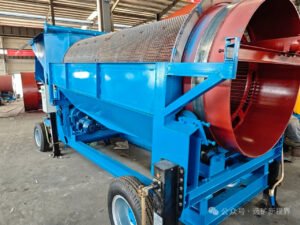
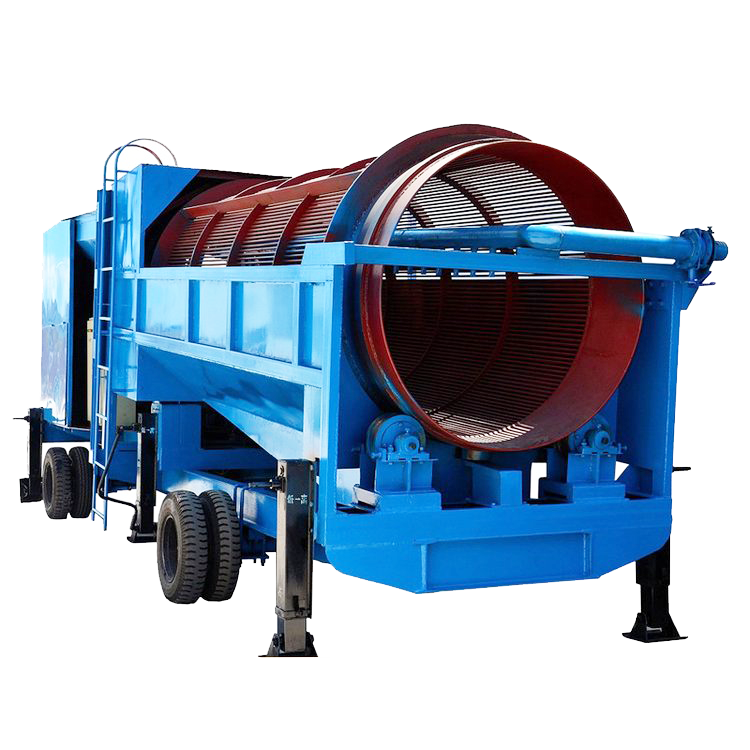
【Description】 The portable gold washing plant integrates ore mining and gold beneficiation operations, comprising an excavation system, beneficiation equipment, a water supply system, a tailings management system, a power supply, and more. Small-scale portable/mobile trommel gold washing plants are fully customizable and mobile.
【Type】 Configurations for mobile gold washing plants vary based on factors such as ore characteristics, processing capacity, and site conditions.
Hard-rock gold deposits and alluvial (placer) gold deposits.
Dryland placer gold, river gold (requiring a gold dredge), and gold found in riverbeds and on beaches.
Suitable for materials containing sticky clay or sludge; equipped with trommel scrubbers and sand washers. Depending on specific conditions,
the plant is equipped with portable mining equipment such as sluice boxes, centrifugal gold concentrators, shaking tables, trommel scrubbers, sand washers, vibrating feeders, vibrating screens, and water pumps.
Bulldozers and excavators are used to stockpile gold-bearing gravel near the washing plant; gravel is fed into the plant via a hopper (where a vibrating screen performs preliminary sizing). Oversized material is discharged, while undersized material mixes with water and passes through beneficiation equipment—such as centrifugal concentrators, mobile shaking tables, or mobile sluice boxes—to recover the gold, with tailings discharged in the standard manner.
【Structure of Mobile/Portable Gold Washing Equipment】
1. Feeding: Dredge pumps, hopper feeders with vibrating grizzlies.
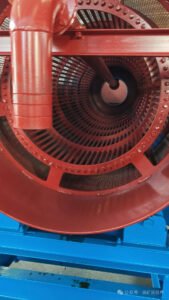
2. Washing & Screening: Typically utilizes rotary scrubbers, trommel scrubbers, sand washers, vibrating screens, etc.
3. Beneficiation: Centrifugal concentrators, shaking tables, sluice boxes, jig machines. 4. Water supply
5. Tailings
6. Mobility system: Composed of a chassis and a towing/steering assembly; features 4 axles and 16 tires, with four mechanical outriggers supporting the centrifuge. It is capable of 180-degree on-the-spot rotation, facilitating easy transport to the work site.
【Working Principles of Mobile Gold Washing Plants】
1. Dry-land gold panning
Mobile dry-land gold washing plants utilize a wheeled structure for easy mobility, capable of separating placer gold from sand found in ancient riverbeds or dried-up beaches. Dry-land operations typically employ a trommel screen, combining a small gold washing unit and sluice boxes into a mobile plant to process placer gold and liberated vein gold. These small-scale plants are lightweight, low-cost, and easy to maintain.
2. Riverbed gold panning
Riverbed gold panning equipment often takes the form of floating gold dredges—multifunctional placer mining vessels that integrate excavation, washing, mineral separation, tailings handling, power generation, and water supply. These dredges can operate in streams, rivers, near-shore waters, and on beaches.
However, for small-scale operations, the cost of a full-scale dredge can be substantial. An alternative approach involves using a dredging pump to transfer fine riverbed sand to a portable trommel screen located on the nearby bank; the undersized material is then washed and classified before being fed into a centrifugal gold concentrator and a shaking table.