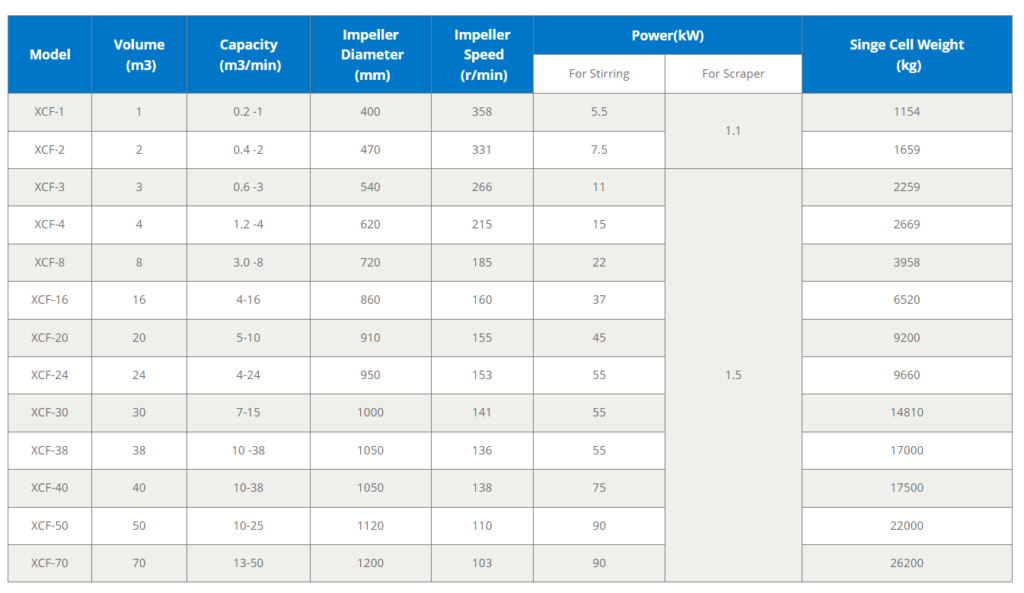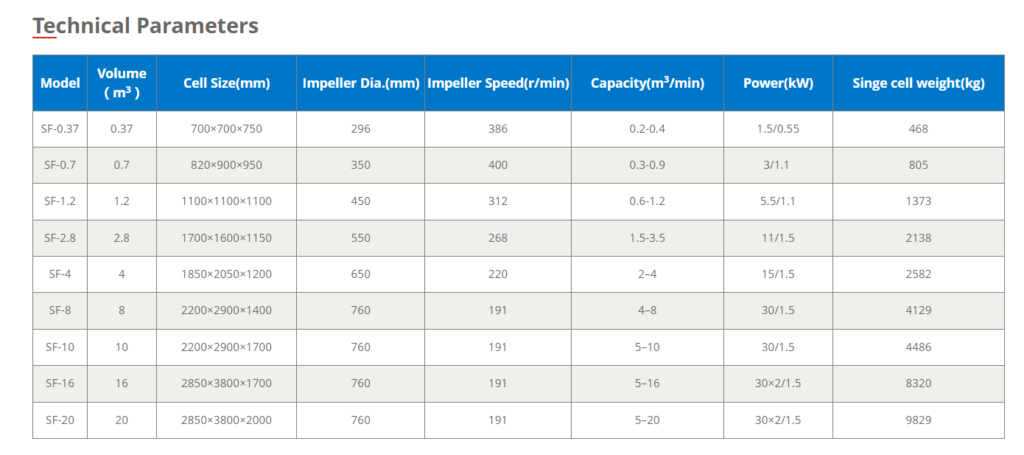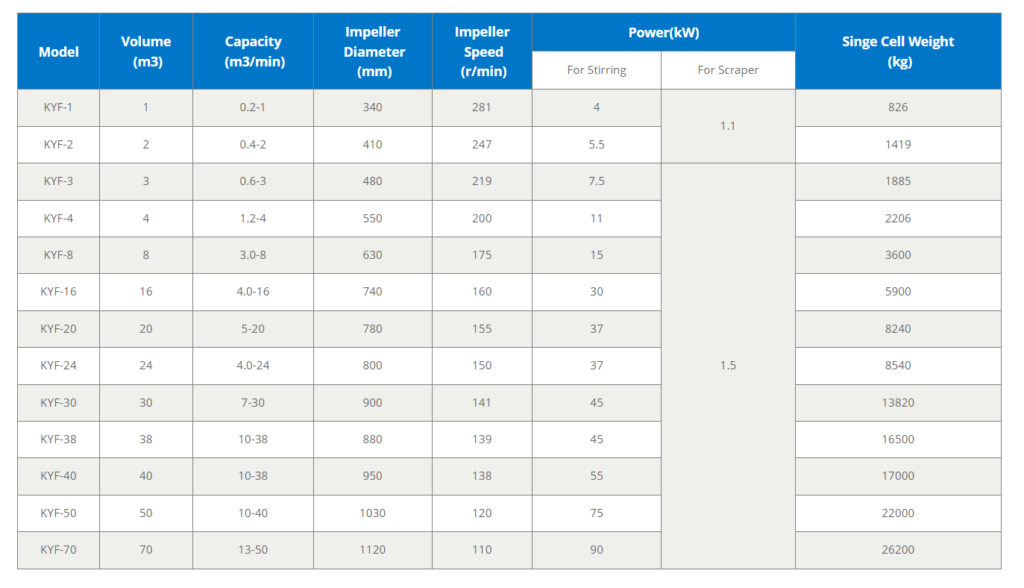
【Processing Capacity】0.18–20 m³/min per cell
【Feed Particle Size】200 mesh (at least 80% passing)
【Types】Agitated flotation machines, self-aspirating flotation machines, aerated flotation machines, flotation columns.
【Models】XJK, SF, GF, CHF, XJC, etc. Please contact us for specific, rapid model selection.
【Applications】Suitable for the flotation of non-ferrous metals such as copper sulfide, gold sulfide, zinc, lead, nickel, antimony, fluorite, and tungsten; also applicable to the roughing of ferrous metals and non-metallic minerals.
Advantages
Flotation Machines in Mineral Processing Plants
(Flotation machines/separators) are primarily used to separate non-ferrous metals such as copper, zinc, lead, nickel, and gold. 【Types】XJK series agitated flotation machines (less common, low capacity); SF series flotation machines (larger volume, superior flotation performance); pneumatic flotation machines (aeration and agitation, high capacity).
【Auxiliary Equipment】Upstream: One or two mixing tanks for mixing flotation reagents and pulp. Downstream: Concentrate tank, thickener, or filter.
【Flotation Cells】Select the appropriate number of flotation cells based on ore grade, mineral type, and processing capacity. Conducting mineral flotation tests is recommended to determine the optimal process parameters, such as pulp density, retention time, and reagent selection.
【Flotation Reagents】Frothers, collectors, activators, depressants, etc.
【Brands】Wemco, Fahrenwald Denver, Callow, BGRIMM, etc.
【How to Select a Mining Flotation Machine】
1. Select the appropriate flotation machine based on ore properties (washability, feed particle size, density, grade, pulp characteristics, pH value, etc.) and the scale of the flotation plant.
2. The primary objective of flotation is to upgrade the ore concentrate. The flotation froth layer should be thin to facilitate the separation of gangue; therefore, using a flotation machine with excessive aeration is not suitable. Consequently, there are differences between the froth flotation machines used for roughing, cleaning, and scavenging stages.
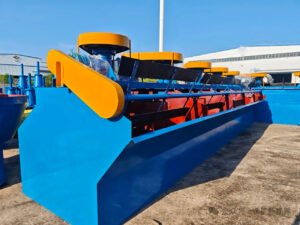
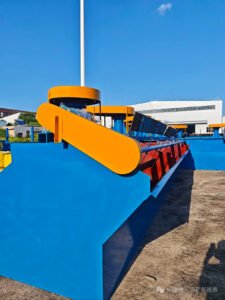
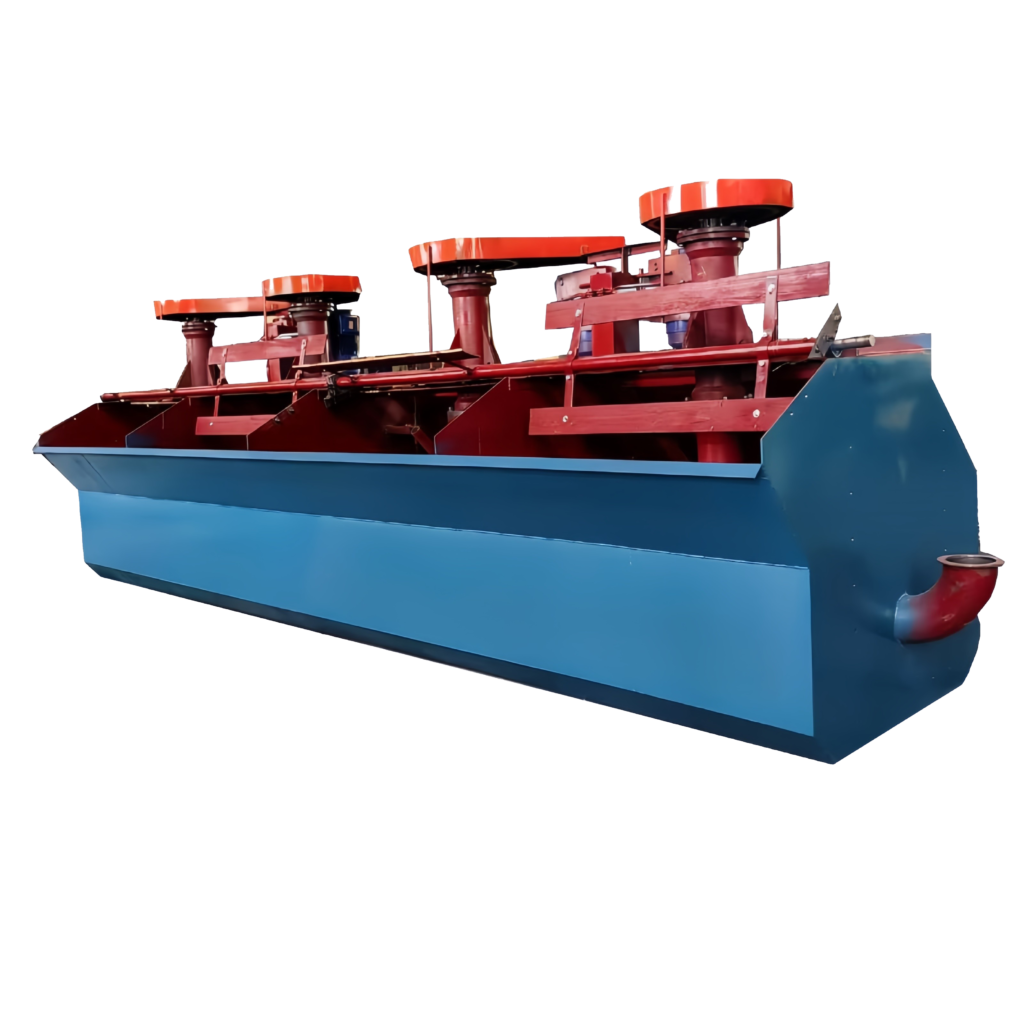
【Flotation Machine Structure】Metallurgical flotation machines primarily consist of a slurry tank, an agitation mechanism, an aeration system, a mechanism for discharging mineralized bubbles, and a motor.
【Flotation Machine Working Principle】Flotation is a separation process used in mineral processing. Inside the machine, slurry treated with chemical reagents undergoes aeration and agitation; specific mineral particles selectively adhere to air bubbles, rise to the surface, and are skimmed off. The remaining particles stay in the slurry, thereby achieving the separation of different minerals. A complete metallurgical froth flotation process comprises roughing, cleaning, and scavenging stages.
【Flotation Methods】Froth flotation for sulfide ores primarily employs two processes—differential flotation and bulk flotation—both of which can improve the recovery rate of fine-grained minerals.
【Flotation Cell Manufacturer】JXSC specializes in manufacturing a full range of mineral processing equipment. We collaborate with mining research institutes to design scientifically sound and reliable processing flows, providing flotation units for ores such as gold, copper, and zinc.