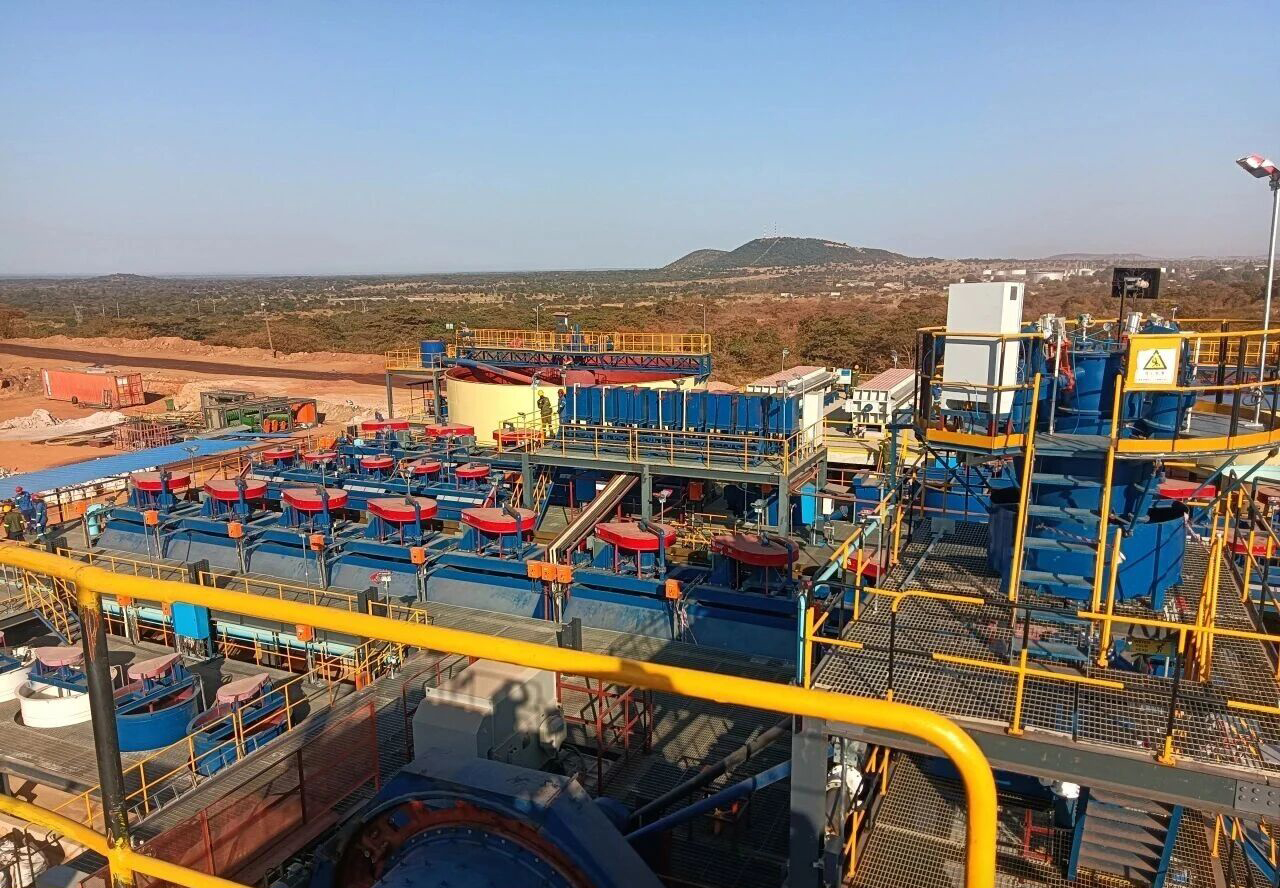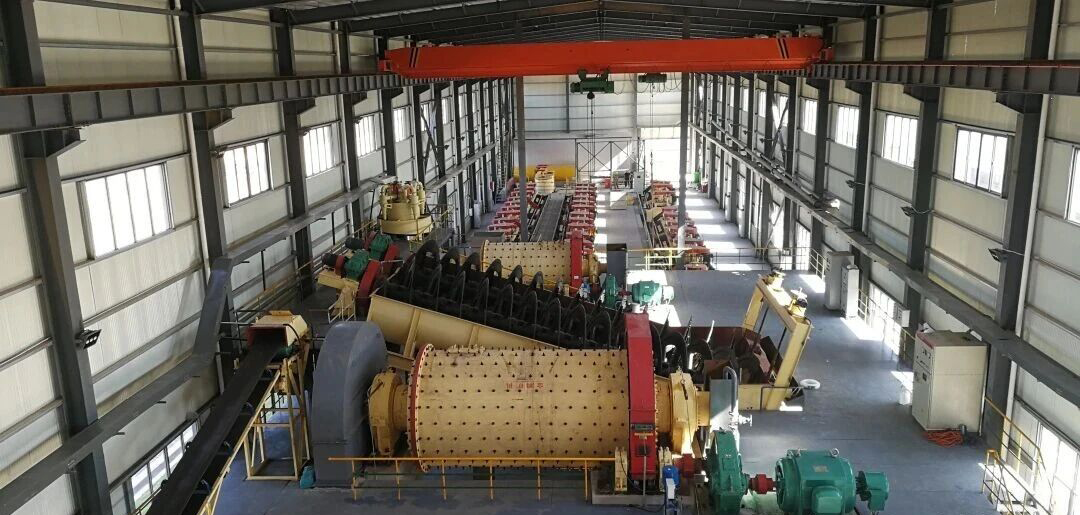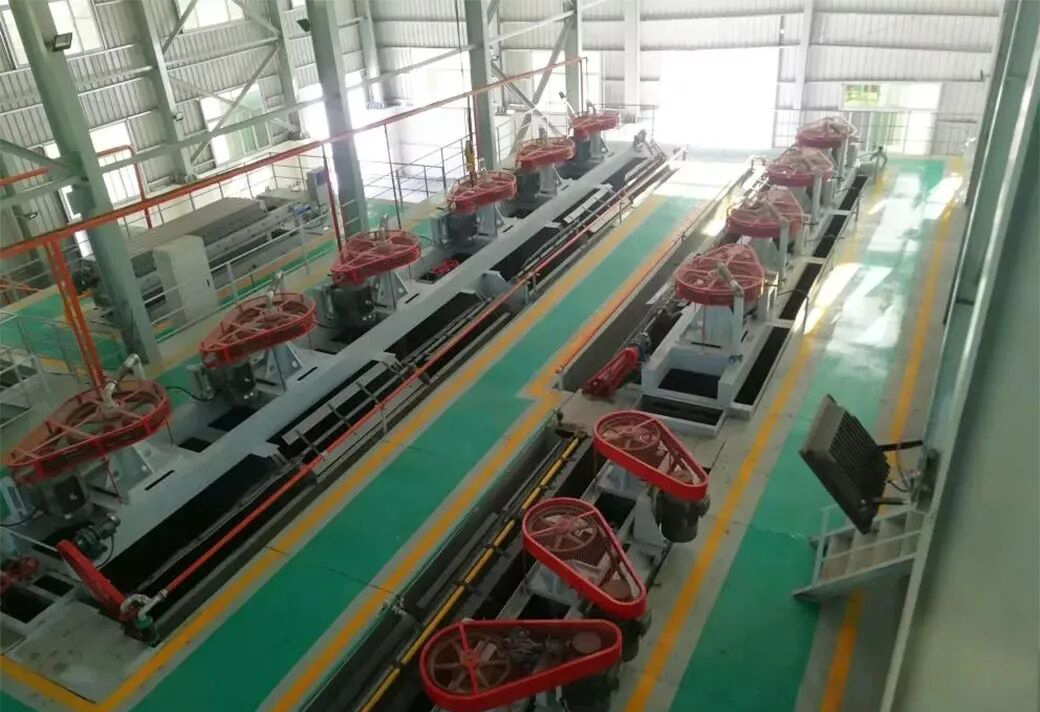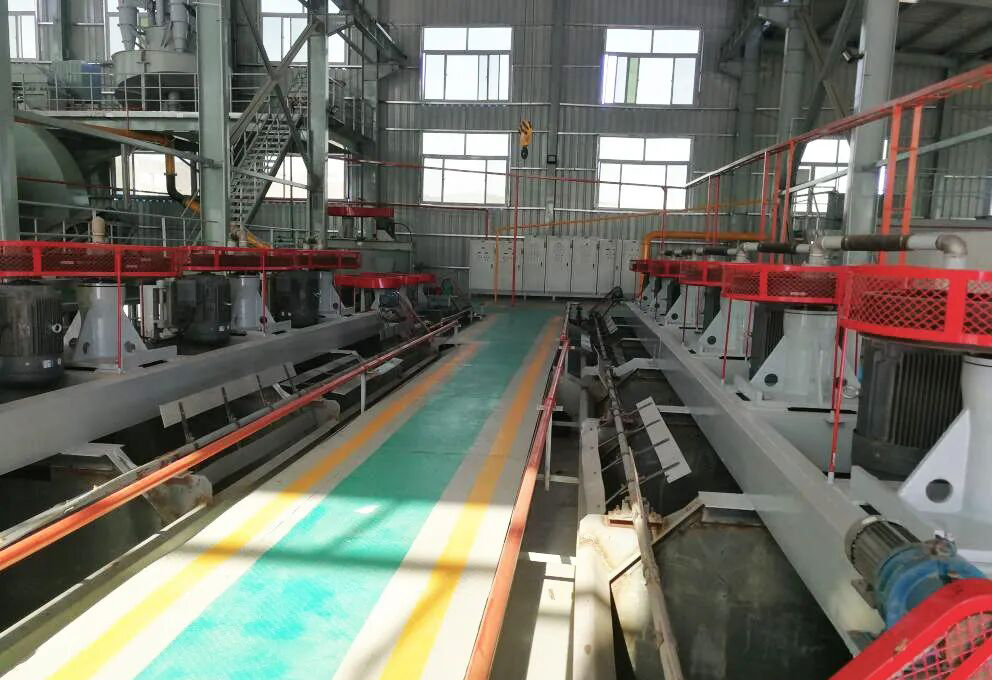
Copper sulfide ore flotation
Copper is one of the important non-ferrous metals, and flotation is often used for its beneficiation in the production process. Based on the different oxidation rates of ores, copper ores can be divided into copper sulfide ores, copper oxide ores, and mixed copper ores. The specific application of flotation methods for various copper ores varies.
The mineral composition of single copper sulfide ore is simple. The main copper minerals include chalcopyrite, chalcopyrite, bornite, covellite, and a small amount of copper oxide minerals. The gangue minerals vary with the type of deposit, mainly including quartz, calcite, feldspar, dolomite, sericite, chlorite, etc. Due to the significant difference in floatability between copper minerals and gangue minerals, flotation is often used for separation.
It is worth noting that due to different occurrences, the structure and texture of single copper sulfide ores undergo significant variations, making the monomer separation of copper minerals and gangue challenging. Therefore, grinding fineness becomes a key factor affecting the flotation performance of single copper sulfide ores. Generally, there are three main flotation processes for single copper sulfide ores:
A process flow of grinding-flotation
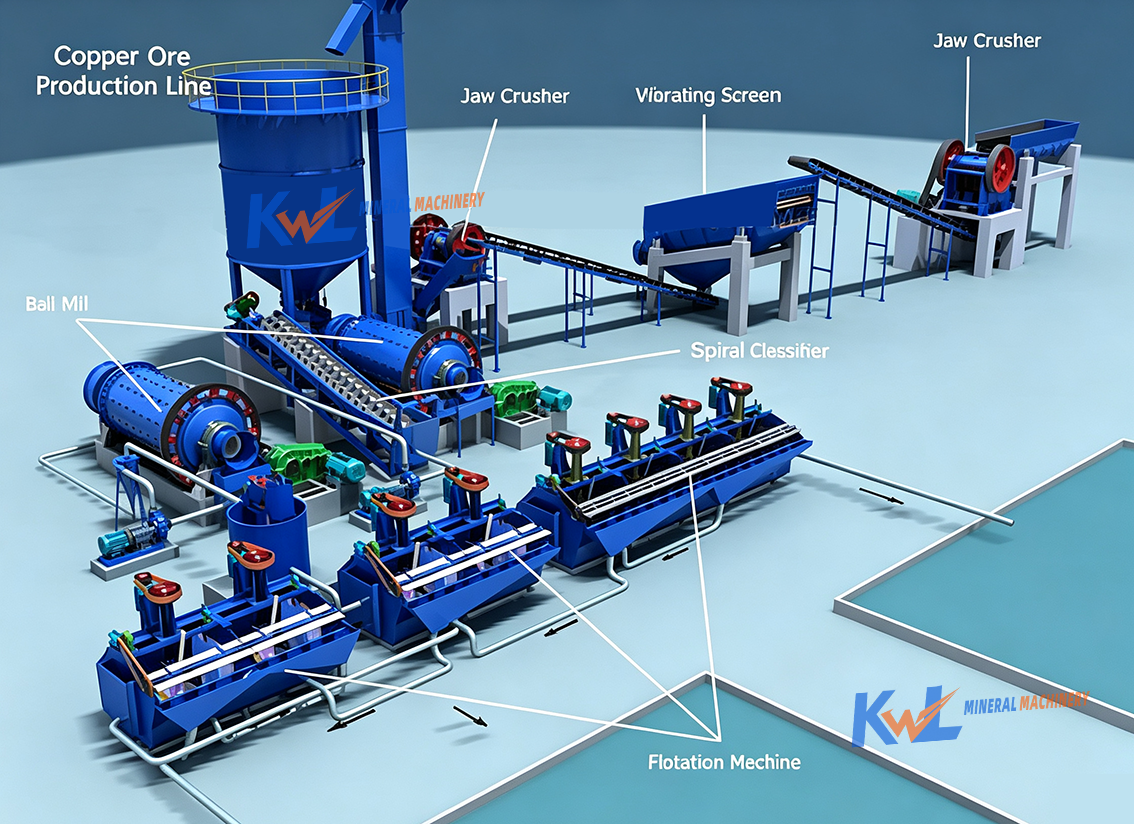
This process flow is suitable for processing ores with coarse and uniform copper mineral dissemination, where the copper minerals are loosely bound to the gangue and the contact edges are smooth and flat. Generally, when the raw ore is ground to -200 mesh, accounting for 50-60%, the copper minerals can be basically dissociated into individual particles. After roughing, scavenging, and one to three cleanings, good flotation indicators can be obtained. This flotation process is simple and the mineral processing cost is low, making it widely used in small and medium-sized copper mineral processing plants.
A process flow involving grinding, flotation, and re-grinding of coarse concentrate
This process flow is mostly suitable for processing single sulfide ores or copper-molybdenum ores of porphyry copper deposits. According to the dissemination characteristics of copper minerals, the raw ore is ground to -200 mesh (40-70%) in one stage, and a large amount of tailings are discarded through roughing and scavenging. After regrinding the coarse concentrate, two to three cleanings can obtain copper concentrate. The tailings from one cleaning in the flotation cycle can be discarded after scavenging, or concentrated and returned to the roughing cycle. A few copper ore processing plants will separately grind the middlings for further processing. This process flow allows copper ore processing plants to achieve better economic benefits when dealing with low-grade raw ore and large processing volumes. In addition, due to the fine particle size of the coarse concentrate after regrinding, the monomer dissociation degree between copper minerals and gangue minerals as well as pyrite is good, and the quality of flotation concentrate is also high.
Two-stage grinding – two-stage (or one-stage) flotation process flow
For copper ores with unevenly distributed coarse and fine particles, in order to dissociate most of the copper minerals into individual units, it is necessary to grind the ore to achieve a -200 mesh size of 80% or even finer. At this point, two-stage grinding is superior to one-stage grinding in terms of grinding efficiency and preventing over-grinding of copper minerals. When using two-stage grinding followed by two-stage flotation, a portion of coarse copper minerals can be flotated after the first stage of coarse grinding, avoiding over-grinding. The grade of this part of the concentrate is generally high and can be used directly as concentrate, or sent for final cleaning, or combined with the concentrate obtained from the flotation after two-stage grinding for joint cleaning. If there are fewer coarse copper minerals in the ore, a two-stage grinding-one-stage flotation process can be adopted. The flotation cycle involves scavenging and two to three cleaning stages, with the middlings generally returning to the two-stage grinding cycle. Relatively speaking, this process has higher grinding costs, more complex equipment configuration, and production operations, and is mostly applied in large and medium-sized copper beneficiation plants.
Summary: There are various flotation methods
Copper sulfide ore flotation method
Copper oxide ore flotation method
Mixed copper ore flotation method
The above is the common copper ore flotation process. For copper ore flotation, different copper ore types require different flotation processes and flotation reagents. Understanding the properties and characteristics of the ore, and comprehensively considering investment budgets and the actual conditions of the beneficiation plant, is crucial for selecting the appropriate flotation process and reagent system to achieve ideal flotation indicators and economic benefits.